
What’s in the blog:
- FinOps: Foundation, but Not the Destination
- What Is Cloud Cost Intelligence?
- Cloud Cost Intelligence Architecture in Azure, AWS, and Multi-Cloud
- Key Capabilities of Cloud Cost Intelligence
- Enterprise Use Case Scenario
- How InOpTra Delivers Cloud Cost Intelligence
- Business Outcomes
- Few Words Before Wrapping Up
Cloud adoption has moved far beyond simple lift-and-shift migrations. Enterprises today operate complex environments spanning Azure subscriptions, AWS accounts, Kubernetes platforms, PaaS services, and SaaS integrations. While this has unlocked agility and scale, it has also introduced a new class of financial complexity.
Cloud costs are no longer static or predictable. Auto-scaling workloads, burstable compute, consumption-based PaaS services, and data egress charges continuously change the cost baseline. In this reality, traditional cost tracking mechanisms fail to provide forward-looking control.
This is where Cloud Cost Intelligence becomes critical. Instead of focusing on retrospective reporting, Cloud Cost Intelligence enables real-time visibility, predictive insights, and automated optimization, ensuring that cloud spend actively supports business objectives rather than reacting to financial surprises after the fact.
FinOps: Foundation, but Not the Destination
FinOps plays an important role in establishing financial accountability across cloud teams. It introduces practices such as:
- Cost allocation using tags and labels
- Chargeback and showback models
- Budget alerts and usage reporting
- Collaboration between engineering, finance, and business units
However, FinOps operates primarily as a governance and reporting framework, not an execution engine.
In large-scale Azure and AWS environments, several limitations become evident:
- Cost reviews are typically monthly or quarterly, while cloud consumption changes daily
- Rightsizing recommendations are often manual and delayed
- Engineers lack real-time feedback during design and deployment phases
- Finance teams see cost overruns only after they occur
As cloud environments grow more distributed and automated, manual FinOps processes cannot scale at the same speed. Organizations require intelligence that can operate continuously and autonomously.
What Is Cloud Cost Intelligence?
Cloud Cost Intelligence extends FinOps by embedding analytics, automation, and engineering controls directly into cloud operations.
At a technical level, Cloud Cost Intelligence combines:
- Telemetry ingestion from Azure Cost Management, AWS Cost Explorer, billing exports, and usage APIs
- AI/ML models to analyze consumption patterns, detect anomalies, and forecast demand
- Automation engines that trigger optimization actions without human intervention
- Context-aware reporting that links spend to applications, environments, and business services
Instead of answering “What did we spend?”, Cloud Cost Intelligence answers:
- What will we spend next week, next month, next quarter?
- Which workloads are over-provisioned or misaligned to demand?
- Which cloud investments directly contribute to revenue or customer experience?
This shift transforms cost management from a financial exercise into a cloud engineering discipline.
Cloud Cost Intelligence Architecture in Azure, AWS, and Multi-Cloud
In a real-world enterprise setup, Cloud Cost Intelligence operates as a cross-cloud control layer.
Data Sources
- Azure Cost Management exports (subscriptions, resource groups, tags)
- AWS Cost Explorer and CUR (Cost and Usage Reports)
- Kubernetes metrics (namespace-level consumption)
- Application telemetry (traffic, performance, demand signals)
Analytics Layer
- Forecasting models analyze historical usage, seasonality, and growth trends
- Anomaly detection identifies abnormal spend spikes in near real time
- Correlation engines map cost to application behavior and business events
Automation Layer
- VM rightsizing based on actual utilization (CPU, memory, IOPS)
- Automated start/stop schedules for non-production workloads
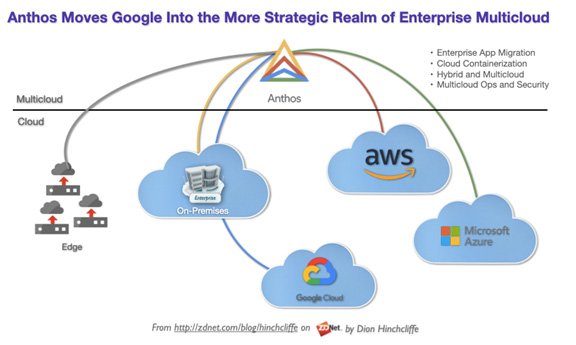
- Dynamic commitment management using Azure Reservations and AWS Savings Plans
- Storage tier optimization (hot → cool → archive)
Governance Layer
- Policy enforcement through Azure Policy, AWS SCPs, and IaC guardrails
- Budget thresholds tied to environments and business units
- Approval workflows integrated into CI/CD pipelines
This architecture ensures consistent cost control across Azure, AWS, and hybrid platforms without slowing down delivery teams.
Key Capabilities of Cloud Cost Intelligence
Predictive Cost Forecasting
Machine learning models analyze historical usage patterns, workload behavior, and business growth indicators to forecast future spend. Forecasts are generated at:
- Subscription and account level
- Application and environment level
- Service-specific level (compute, storage, data, PaaS)
This allows organizations to plan budgets proactively and prevent cost overruns before they occur.
Automated Cost Optimization
Optimization actions are executed continuously, not manually:
- Underutilized VMs are resized or decommissioned
- Idle resources are identified and automatically remediated
- Savings plans and reservations are optimized dynamically
- Non-production environments are governed by policy-based schedules
Automation ensures optimization keeps pace with cloud elasticity.
Business Value Mapping
Cloud spend is mapped to:
- Business services
- Revenue-generating applications
- Customer-facing workloads
This enables leadership to differentiate between cost reduction and value preservation, ensuring high-impact workloads are never optimized blindly.
Intelligent Governance
Policies enforce financial discipline while preserving engineering autonomy. Guardrails are embedded into:
- Infrastructure-as-Code templates
- CI/CD pipelines
- Self-service provisioning portals
Governance becomes preventive rather than corrective.
Enterprise Use Case Scenario
A global enterprise operating across Azure and AWS experienced rapid growth in cloud spending due to application modernization and regional expansion. Monthly cost reviews revealed overspend, but corrective actions were slow and inconsistent.
By implementing Cloud Cost Intelligence with InOpTra:
- Predictive models forecasted cost growth per application and region
- Automated rightsizing reduced idle compute across non-production environments
- Commitment optimization improved reservation coverage across Azure and AWS
- Cost-to-business mapping enabled leadership to prioritize high-value workloads
Within months, the organization achieved predictable spend, reduced waste, and faster financial decision-making, without impacting application performance or delivery velocity.
How InOpTra Delivers Cloud Cost Intelligence
At InOpTra, Cloud Cost Intelligence is not treated as a reporting or tooling exercise. It is delivered as a cloud operating model transformation that combines engineering discipline, automation, governance, and business alignment. Our approach ensures that cost optimization is continuous, scalable, and embedded into day-to-day cloud operations, rather than dependent on periodic reviews or manual interventions.
InOpTra’s delivery model is designed to work seamlessly across Azure, AWS, and multi-cloud environments, addressing the real-world complexity faced by large enterprises.
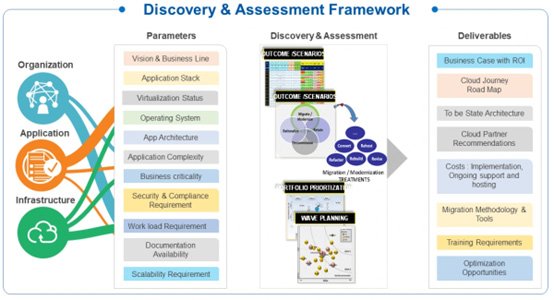
1. Cloud Cost Intelligence Assessment and Baseline Engineering
Every engagement begins with a deep technical assessment of the customer’s cloud estate. This goes far beyond reviewing billing dashboards.
InOpTra performs a structured analysis covering:
- Azure subscriptions, AWS accounts, and organizational structures
- Resource utilization patterns across compute, storage, network, and PaaS services
- Tagging, labeling, and cost allocation maturity
- Current use of Azure Reservations, AWS Savings Plans, and commitment models
- Environment-level spend (production, non-production, DR, sandbox)
- Application and workload criticality mapping
This assessment establishes a cost-to-architecture baseline, enabling InOpTra to identify systemic inefficiencies such as over-provisioned workloads, inconsistent governance, fragmented ownership, and unmanaged growth patterns.
From a marketing and business standpoint, this phase gives stakeholders clarity and confidence—a clear understanding of where money is being spent, why it is being spent, and where optimization opportunities exist.
2. Architecture Design for Cloud Cost Intelligence
Based on assessment findings, InOpTra designs a Cloud Cost Intelligence architecture tailored to the customer’s cloud maturity and scale.
This architecture typically includes:
- Centralized cost and usage ingestion from Azure Cost Management, AWS Cost Explorer, and billing exports
- Integration with telemetry sources such as Azure Monitor, CloudWatch, and Kubernetes metrics
- Analytics and forecasting layers to correlate usage, demand, and cost behavior
- Automation components integrated with native cloud services and DevOps pipelines
- Governance controls embedded using Azure Policy, AWS SCPs, and Infrastructure-as-Code guardrails
Rather than introducing complexity, InOpTra ensures the architecture extends native cloud capabilities and aligns with existing enterprise platforms. This design-first approach ensures scalability, auditability, and long-term sustainability.
From a positioning perspective, this demonstrates InOpTra’s strength as a cloud engineering partner, not just a FinOps advisor.
3. Automation-Driven Cost Optimization
Automation is the core differentiator in how InOpTra delivers Cloud Cost Intelligence.
Instead of relying on dashboards and manual recommendations, InOpTra implements policy-driven automation that continuously optimizes cloud environments. This includes:
- Automated rightsizing of virtual machines based on real utilization data
- Identification and remediation of idle or orphaned resources
- Scheduled governance for non-production workloads
- Continuous optimization of Azure Reservations and AWS Savings Plans
- Storage lifecycle management across hot, cool, and archive tiers
These optimizations are implemented with guardrails, ensuring that performance, availability, and business-critical workloads are never compromised.
From a marketing perspective, this positions InOpTra as an enabler of hands-free optimization, allowing engineering teams to focus on innovation while cost efficiency runs in the background.
4. Business Context and Value Mapping
One of the most critical gaps in traditional cost management is the inability to connect spend to business value. InOpTra addresses this by embedding business context into Cloud Cost Intelligence.
Cloud costs are mapped to:
- Applications and platforms
- Business units and cost centers
- Revenue-generating and customer-facing services
- Regulatory and compliance-driven workloads
This enables leadership to move beyond blanket cost-cutting and instead make informed investment decisions. High-value workloads are protected, while low-impact or inefficient services are targeted for optimization or redesign.
This approach resonates strongly with executive stakeholders, reinforcing InOpTra’s role as a strategic advisor, not just a technical implementer.
5. Intelligent Governance Without Slowing Innovation
Governance is often perceived as restrictive. InOpTra redefines governance as an enabler of scale.
Using policy-as-code and automation, InOpTra embeds financial governance into:
- Self-service provisioning workflows
- CI/CD pipelines
- Infrastructure-as-Code templates
This ensures that cost controls are enforced before resources are deployed, not after overspend occurs. Engineers retain autonomy, while organizations maintain financial discipline.
From a messaging standpoint, this aligns perfectly with InOpTra’s philosophy of secure, scalable, and well-governed cloud platforms.
6. Continuous Optimization and Operational Enablement
Cloud Cost Intelligence is not a one-time initiative. InOpTra ensures long-term success through:
- Continuous monitoring and optimization cycles
- Periodic forecasting and demand planning reviews
- Enablement of customer teams with operational runbooks
- Integration with existing ITSM and DevOps processes
By operationalizing Cloud Cost Intelligence, InOpTra helps customers sustain savings, adapt to growth, and evolve alongside cloud platforms.
Why InOpTra
What differentiates InOpTra is the ability to combine:
- Deep Azure and AWS engineering expertise
- Strong understanding of enterprise governance and operating models
- Automation-first mindset
- Business-aligned delivery approach
InOpTra does not just help organizations reduce cloud costs—we help them engineer financial intelligence into the cloud, ensuring that every investment supports agility, performance, and business growth.
Business Outcomes
Organizations adopting Cloud Cost Intelligence with InOpTra consistently achieve:
- Reduced cloud waste across environments
- Improved budget predictability and forecasting accuracy
- Faster and more confident investment decisions
- Stronger alignment between cloud spend and business priorities
Cloud costs evolve from an operational risk into a strategic lever for growth and innovation.
Few Words Before Wrapping Up
Cloud financial management is no longer about tracking bills—it is about engineering intelligence into the cloud itself. As platforms evolve, so must the way organizations govern consumption and value realization.
By moving beyond FinOps and adopting Cloud Cost Intelligence, enterprises gain the ability to predict, optimize, and govern cloud spending with confidence. Keep optimizing, keep learning, and keep building—because in the cloud, sustainable efficiency is what enables long-term innovation.

